
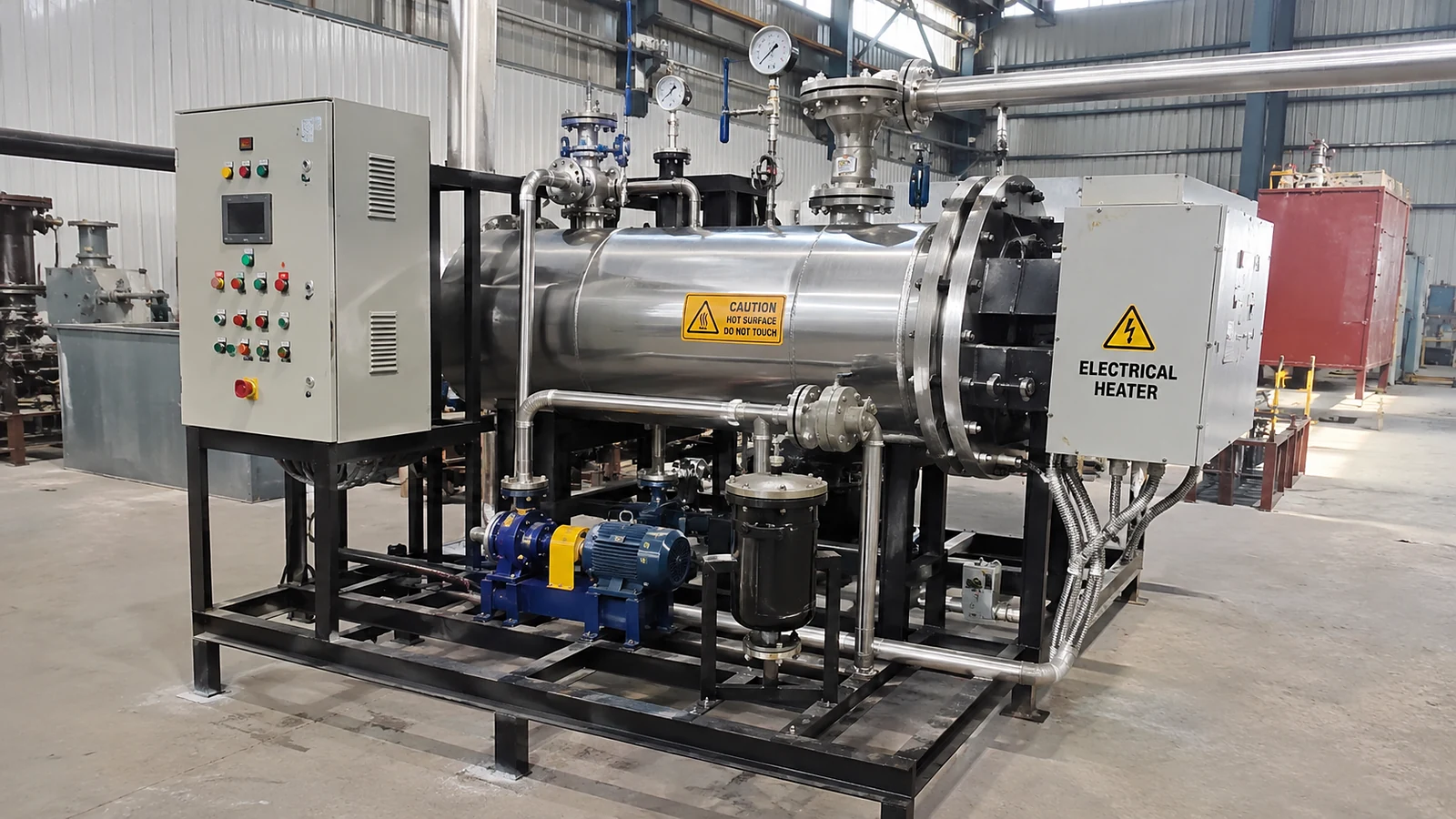
Electric Thermic Fluid Heating Systems
Electric thermic-fluid heating systems use electrical resistance heaters to warm a heat-transfer fluid, which is then circulated to one or more process users. They are suited to applications that require controlled indirect heating and stable process temperatures without placing a heater directly inside every production vessel. A typical package includes a heater vessel or circulation heater, pump, expansion arrangement, piping, temperature and pressure instruments, electrical controls, and safety interlocks. The system must be engineered around the fluid's permitted operating temperature, viscosity, flow rate, film-temperature limit, and compatibility with wetted materials. Correct circulation is essential: low flow can cause excessive heater surface temperatures and accelerate fluid degradation. The package may be designed for a single machine or multiple heating zones, with staged or modulating electrical power. Final capacity depends on the process heat load, start-up duty, losses, and the required supply and return temperatures.
Thermic fluid heater: hot oil is pumped around a closed loop to the process user and back.
How it works
Electrical elements transfer heat to circulating thermic fluid. The pump delivers the hot fluid to process equipment, where it releases heat before returning to the heater. Controls coordinate fluid temperature, flow, and heater power.
Information to provide when ordering
- Required process duty
- Supply/return temperatures
- Fluid type
- Flow rate
- Pressure
- Number of users/zones
- Heat-up time
- Available electrical supply
- Layout
- Control/safety requirements
Where it is used
What it heats
Need electric thermic fluid heating systems for your application?
Share the details listed above and our engineers will recommend the right design and send a quotation. Call +91 911-958-4548 / +91 749-999-1704.