
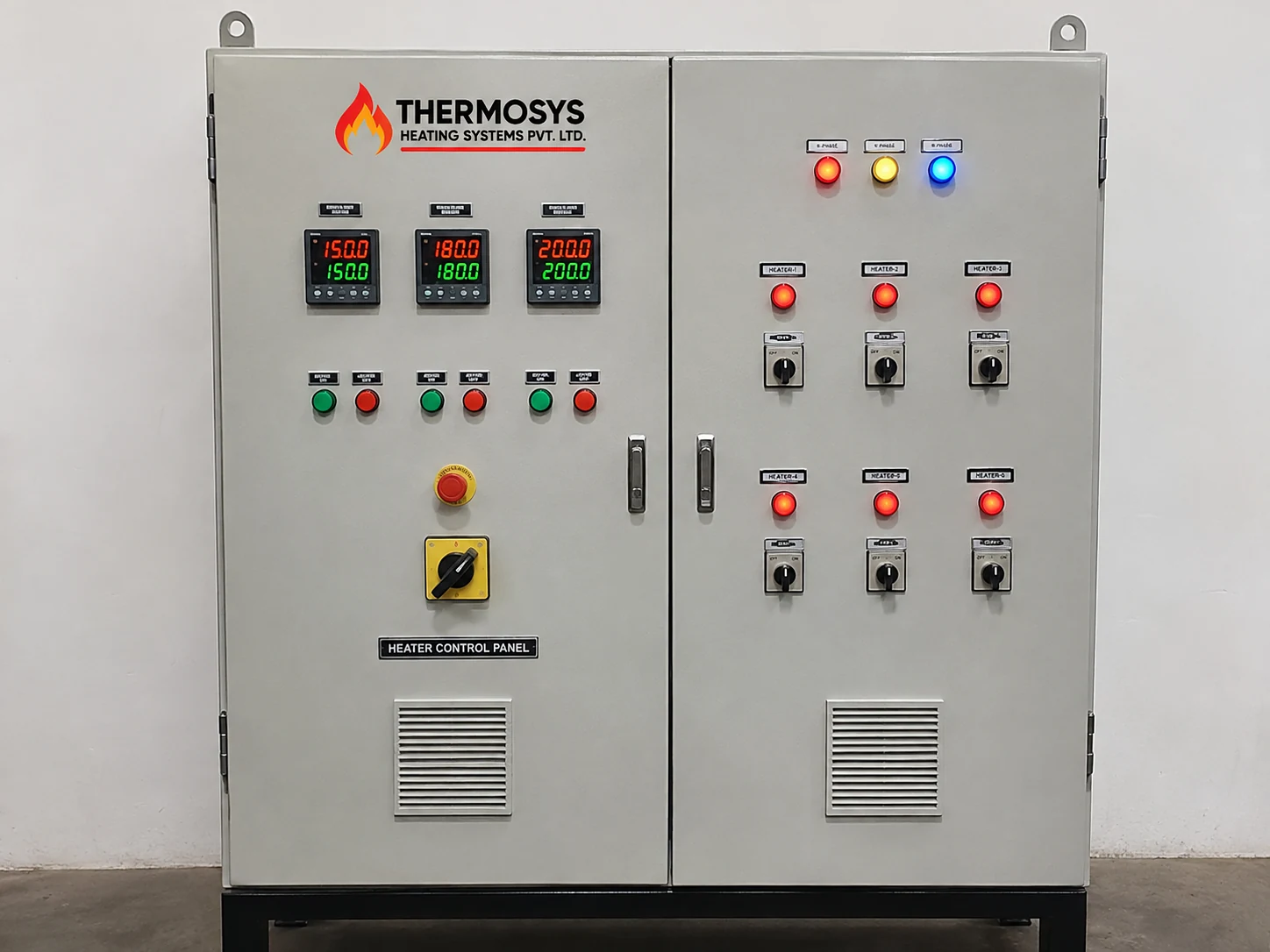
Electromechanical Switching Control Panels
Electromechanical switching control panels use contactors, relays, protective devices, and control instruments to switch electric heaters on and off or in defined stages. They are commonly used where straightforward, robust control is suitable for the process and the required temperature stability can be achieved through on/off or staged operation. A typical panel may include main isolation, short-circuit and overload protection, contactors, control fuses, temperature controllers, indication, alarms, and interlocks. The electrical design must account for heater load, supply voltage, phase configuration, switching frequency, ambient temperature, enclosure rating, and the applicable electrical standards. Contactors are subject to electrical and mechanical wear, so the switching duty and expected cycle frequency should be considered. Proper sensor wiring, earthing, cable sizing, ventilation, and labelling are important to maintain safe and serviceable operation.
Contactor panel: contactors switch the heater fully ON and OFF to hold the temperature.
How it works
A temperature controller or process signal commands the contactors to energise or de-energise heater circuits. Protective devices interrupt the circuit under specified fault conditions, while interlocks can prevent heating when required process conditions are not satisfied.
Information to provide when ordering
- Total load and circuit layout
- Voltage/phase
- Number of zones
- Switching frequency
- Control method
- Controller/sensor type
- Fault and safety interlocks
- Enclosure/IP rating
- Site standards
Where it is used
What it heats
Need electromechanical switching control panels for your application?
Share the details listed above and our engineers will recommend the right design and send a quotation. Call +91 911-958-4548 / +91 749-999-1704.