
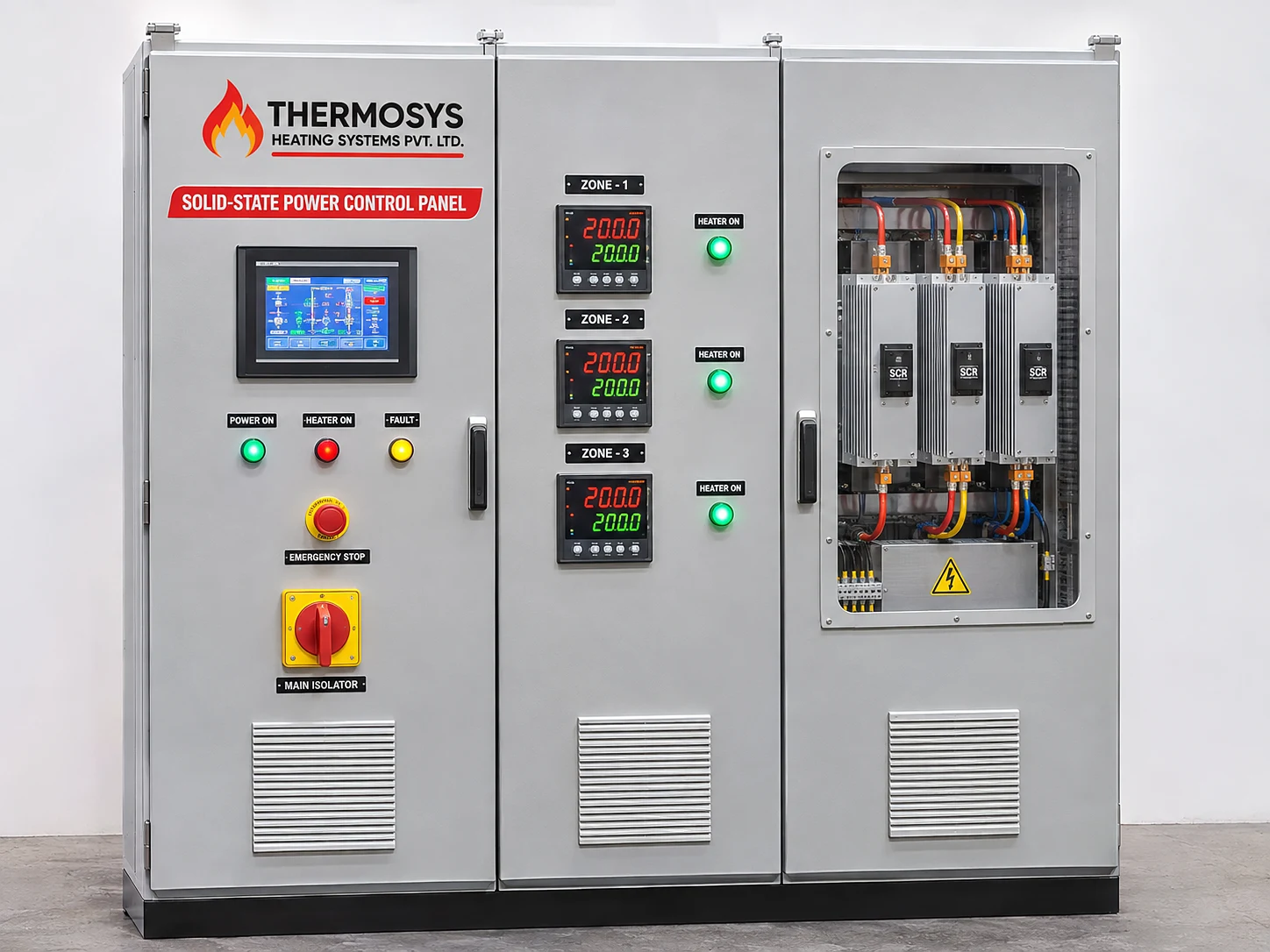
Solid-State Power Control Panels
Solid-state power control panels regulate electrical power to heaters using semiconductor switching devices such as thyristor-based power controllers or suitable solid-state relays. They are often selected when more frequent switching, smoother power adjustment, or tighter temperature regulation is needed than conventional contactor switching can provide. Depending on the application, control may use burst firing, zero-cross switching, or phase-angle control; the appropriate method depends on heater characteristics, supply quality, and process requirements. The panel design should consider load current, voltage, single- or three-phase operation, heater resistance changes with temperature, harmonics, cooling requirements, short-circuit protection, and electromagnetic compatibility. Semiconductor devices can generate substantial heat and require appropriate heatsinking and cabinet ventilation. A complete system may include a temperature controller, current monitoring, alarms, and over-temperature interlocks.
SSR / thyristor panel: power to the heater is varied smoothly and silently.
How it works
The power controller varies the proportion or timing of electrical energy delivered to the heater in response to a control signal. The temperature sensor provides feedback, allowing the system to maintain the process setpoint with reduced temperature cycling when correctly tuned.
Information to provide when ordering
- Heater load and resistance characteristics
- Voltage/phase
- Current per zone
- Control signal
- Switching method
- Cooling/ambient conditions
- Protection
- Communications
- Enclosure rating
- Required alarms/interlocks
Where it is used
What it heats
Need solid-state power control panels for your application?
Share the details listed above and our engineers will recommend the right design and send a quotation. Call +91 911-958-4548 / +91 749-999-1704.