
Electric Circulation Heaters
Electric circulation heaters heat a flowing liquid or gas as it passes through an insulated pressure body containing electric heating elements. They are useful where the process requires continuous heating, a controlled outlet temperature, and compact integration into pipework. The heater body, element surface loading, flow path, and control arrangement must be matched to the medium's properties and operating pressure. Fluid viscosity, gas density, flow rate, inlet temperature, and allowable pressure drop all affect sizing. Low-flow or no-flow conditions can cause element overheating, so flow switches, pump interlocks, and independent high-limit protection may be necessary. The unit can be supplied as a component or integrated into a circulation skid with pump, valves, instruments, and a power panel.
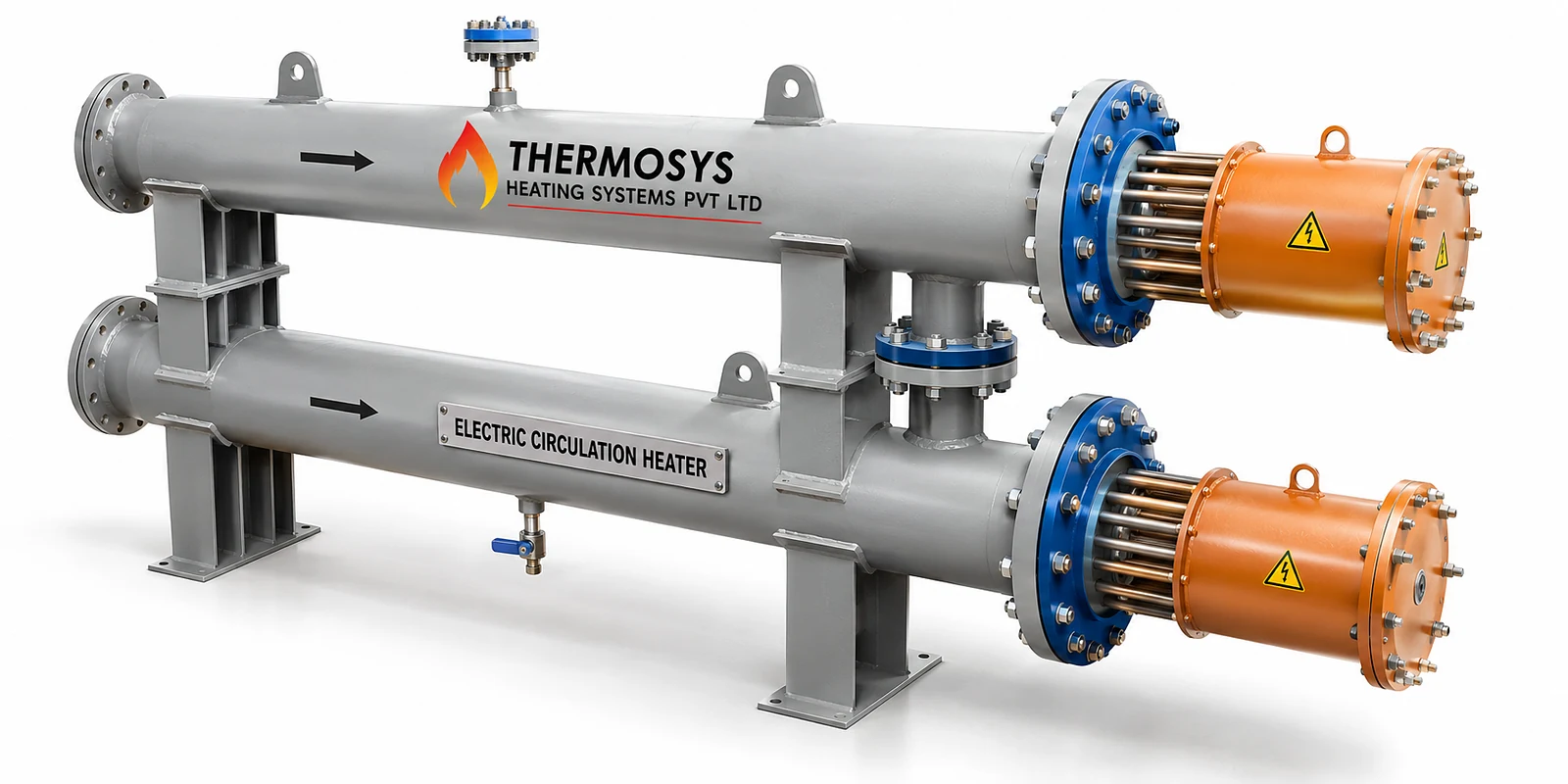
Electric circulation heater: the fluid circulates through the heater vessel and leaves at the set temperature.
How it works
Process fluid moves through the heater body and absorbs heat from the resistance elements. A controller adjusts power using temperature feedback, while flow and high-limit interlocks protect the assembly.
Information to provide when ordering
- Medium and properties
- Flow rate
- Inlet/outlet temperature
- Pressure
- Pressure drop
- Voltage and kW
- Wetted materials
- Connection sizes
- Safety interlocks
Where it is used
What it heats
Need electric circulation heaters for your application?
Share the details listed above and our engineers will recommend the right design and send a quotation. Call +91 911-958-4548 / +91 749-999-1704.