
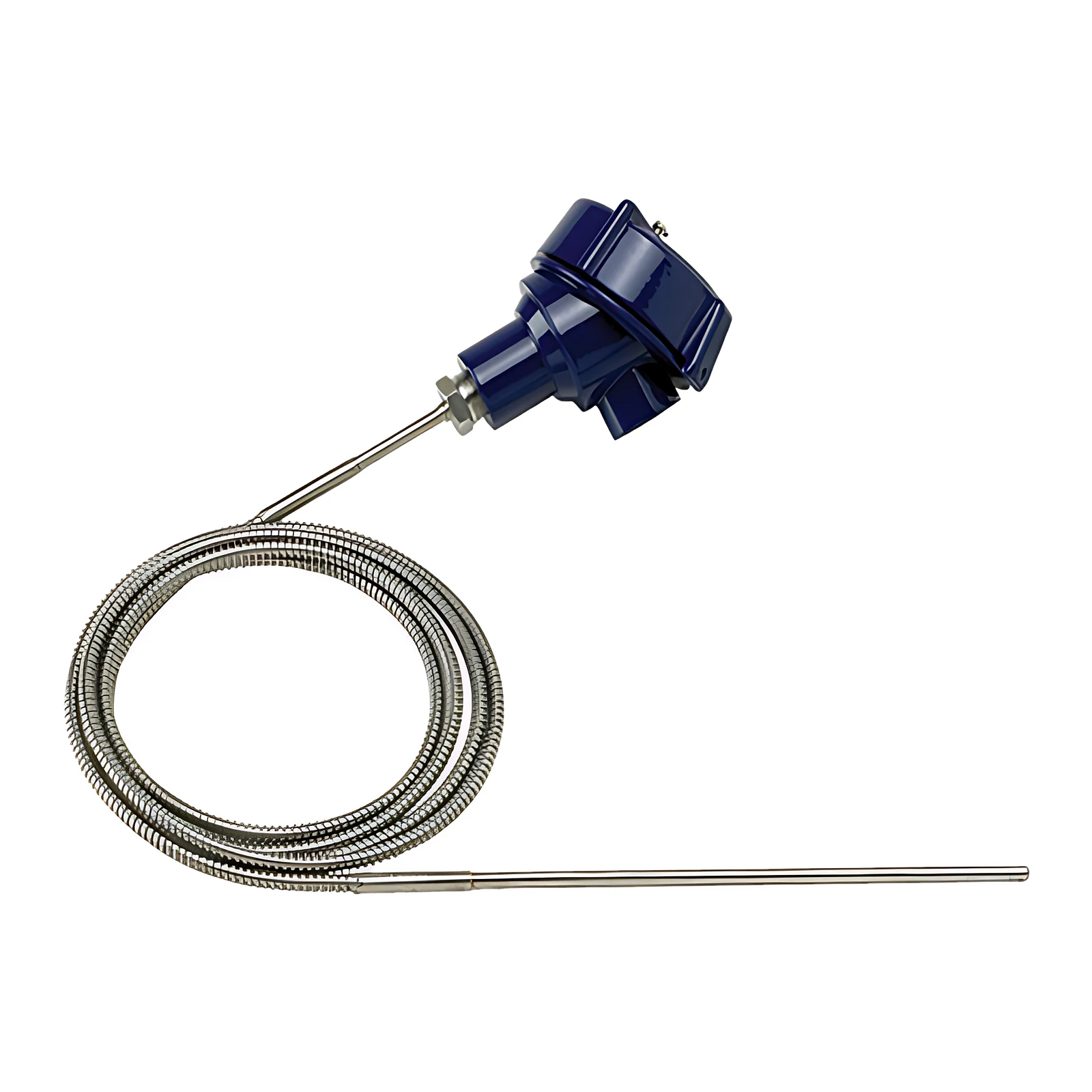
RTD Temperature Sensors
Resistance temperature detectors (RTDs) measure temperature through the predictable change in electrical resistance of a sensing element, commonly platinum. They are frequently selected where stable, repeatable measurements and good accuracy are important within their applicable temperature range. Industrial RTDs may use Pt100 or Pt1000 elements and can be supplied in two-, three-, or four-wire configurations. The wire arrangement influences how lead resistance affects measurement accuracy, especially over longer cable runs. Probe sheath, insertion length, mounting thread, process connection, response time, and the controller input must all match the installation. RTDs are commonly used for process liquids, tanks, pipes, machinery, and controlled heating equipment. They should be protected from vibration, corrosion, excessive temperatures, and mechanical loads beyond their design limits.
RTD sensor: the platinum element changes resistance with temperature and the instrument reads it.
How it works
The sensing element's resistance changes with temperature. A compatible transmitter or controller measures the resistance and converts it into a temperature value, with wiring configuration used to compensate for lead resistance as required.
Information to provide when ordering
- Pt100/Pt1000
- Wiring configuration
- Probe diameter and insertion length
- Sheath material
- Process connection
- Temperature range
- Response time
- Cable/connector
- Accuracy
- Controller compatibility
Where it is used
What it heats
Need rtd temperature sensors for your application?
Share the details listed above and our engineers will recommend the right design and send a quotation. Call +91 911-958-4548 / +91 749-999-1704.